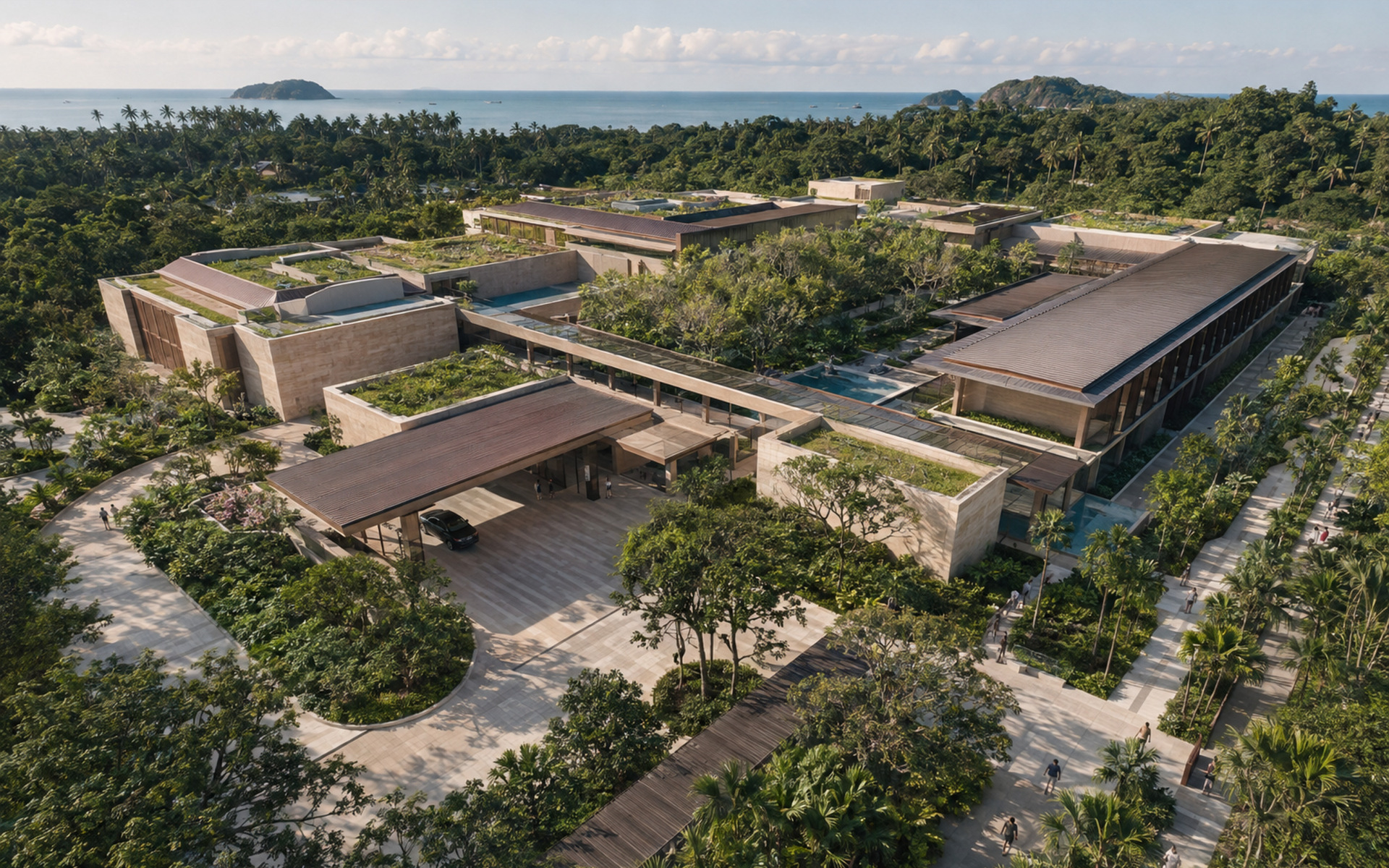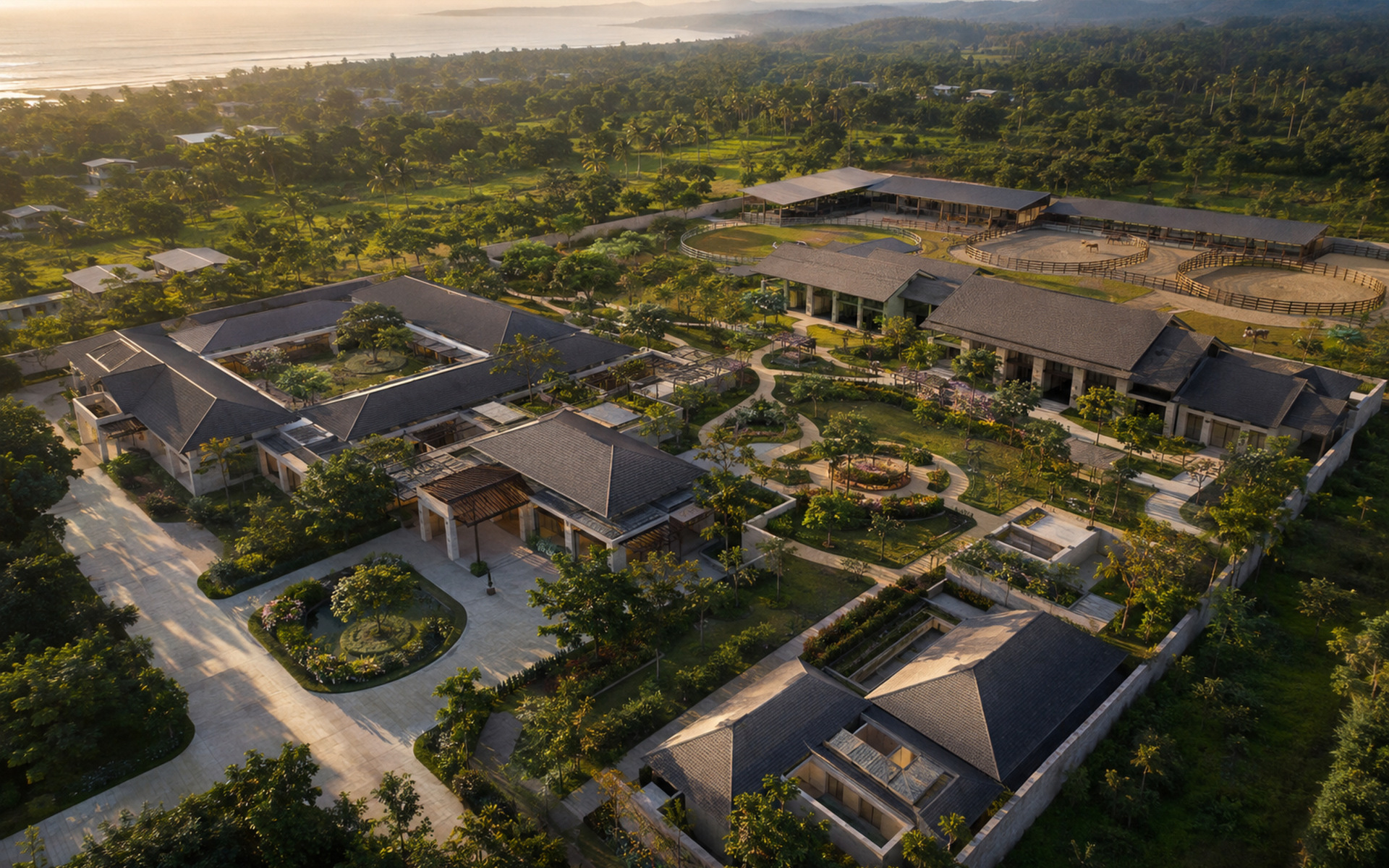
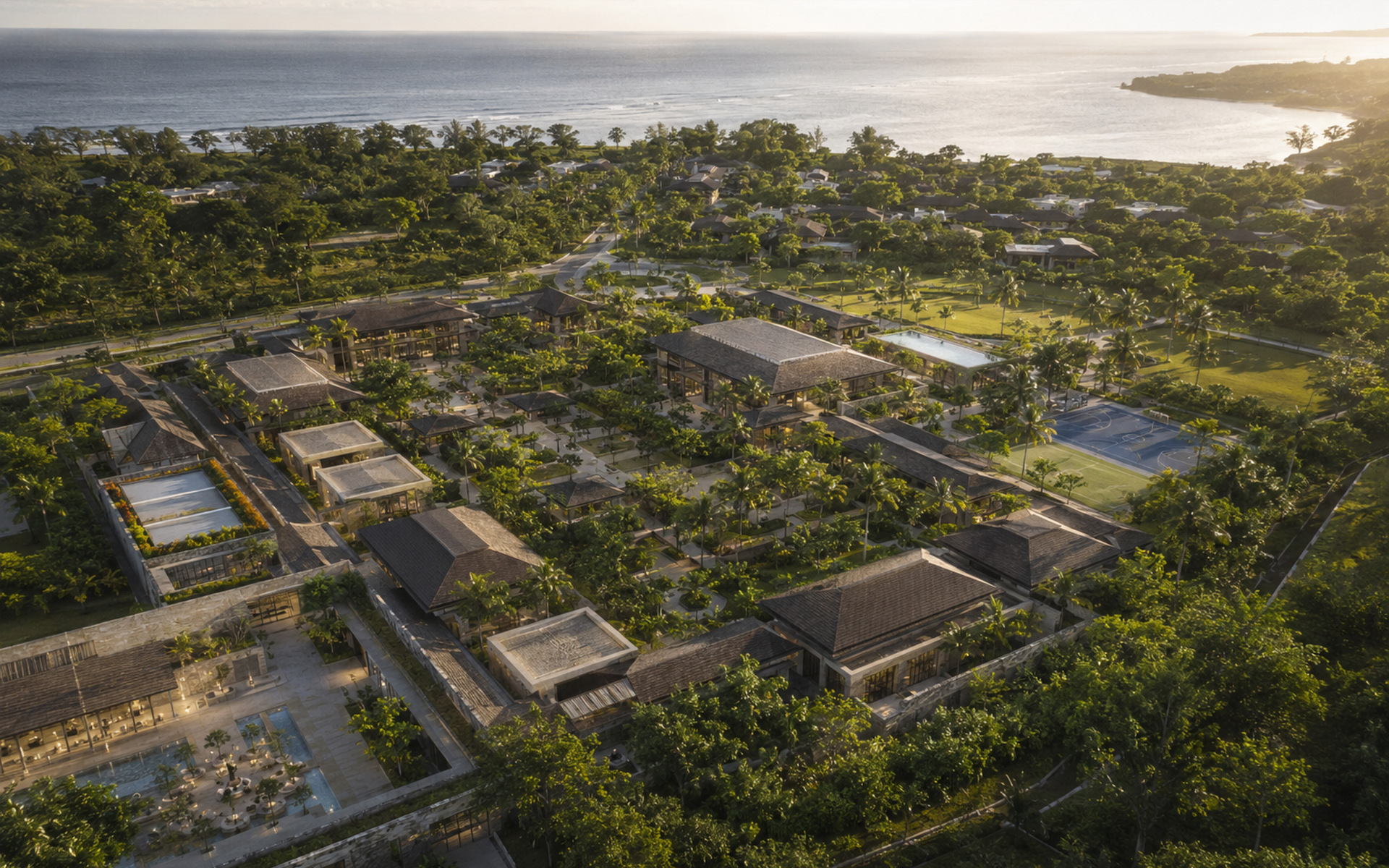
The complex in numbers
A facility planned in the founding concept dated 13 May 2026. Capacities, areas and costs are source estimates at full development, not an announcement of current operations, equipment or approvals.
| Indicator | Planning estimate |
|---|---|
| Project land | 500,000 m² |
| Built floor area | 60,000 m² |
| Beds | 256 |
| Outpatient services | About 450 per day |
| Workforce | 1,050 full-time equivalents |
| Capital budget | USD 215 million |
| Equipment, platforms and robotics | 38 items costing USD 54 million, included in the complex budget |
Capacity and levels of care
| Level | Planned capacity |
|---|---|
| Medically managed withdrawal | 48 beds including 12 high-observation beds |
| Co-occurring psychiatric or medical conditions | 48 beds |
| Residential treatment | 128 beds in small units |
| Transition and recovery | 32 beds |
| Emergency and stabilisation | 8 stations |
| Partial hospitalisation programme (PHP) | 120 places per day |
| Intensive outpatient programme (IOP) | 120 places |
| Clinics or telecare | About 210 visits per day |
| Total beds | 256 |
Treatment services
- Multidimensional assessment and withdrawal care for alcohol, opioids, sedatives and stimulants.
- Psychiatry, internal medicine, infectious disease and liver care.
- Medicines for opioid or alcohol use disorder according to Indonesian licensing, alongside psychotherapy, family interventions and peer support.
- Motivational interviewing, cognitive behavioural therapy and contingency management with ethical safeguards, plus vocational and financial rehabilitation.
- Overdose prevention, naloxone and family training.
- A discharge plan covering medicine, housing, follow-up and emergencies, with local and remote follow-up after returning to the patient’s city to maintain continuity of care.
Patient safety and rights
- Care is voluntary and respects privacy, grievance rights, communication and family. Forced labour, humiliation and collective punishment are prohibited.
- Low-ligature-risk rooms in high-risk units, with repeated assessment of suicide, violence and withdrawal risks.
- Naloxone and resuscitation in every unit, with strict control of diversion or theft of controlled medicines.
- Seclusion and restraint only as a last resort, documented and independently reviewed.
- Therapeutic security staff trained in trauma-informed care.
- Separate adults and adolescents. An adolescent programme requires a separate building, team and safeguarding governance.
Technology and robotics supporting care
- Automated pharmacy, controlled-medicine cabinets, and transport, cleaning and telepresence robots.
- Early-warning support for withdrawal, overdose or self-harm, with immediate human review and approved clinical procedures.
- An algorithm cannot independently deny treatment or discharge, determine privileges, prescribe medicine or notify police.
- No covert tracking. Sensors require consent or a documented, proportionate legal safety necessity.
Planned workforce
| Category | Full-time equivalents |
|---|---|
| Addiction medicine, psychiatry, internal and emergency medicine | 70 |
| Nursing | 300 |
| Psychology, counselling, social work and occupational therapy | 250 |
| Peer support and vocational rehabilitation | 90 |
| Pharmacy and laboratory | 55 |
| Quality, research and AI | 75 |
| Administration, therapeutic security and facilities | 210 |
| Total | 1050 |
Estimated functional budget
All figures are in USD million.
| Item | USD million |
|---|---|
| Buildings, systems and smart finishes | 88 |
| Medical and laboratory equipment | 25 |
| Specialist manufacturing, equine facilities or platforms | 12 |
| Robotics, AI and systems | 17 |
| Site works and internal services | 16 |
| Furniture and non-medical equipment | 11 |
| Design, permits, training and trials | 14 |
| Risk and escalation contingency | 32 |
| Total | 215 |
Transition and recovery units
The founding report records 32 transition and recovery beds, while equipment annex item C3-S07 specifies furnishing 32 apartments. Both units are retained as written; no number of beds per apartment is assumed before design reconciliation.
Comprehensive founding report · Source pages: 14 ↗