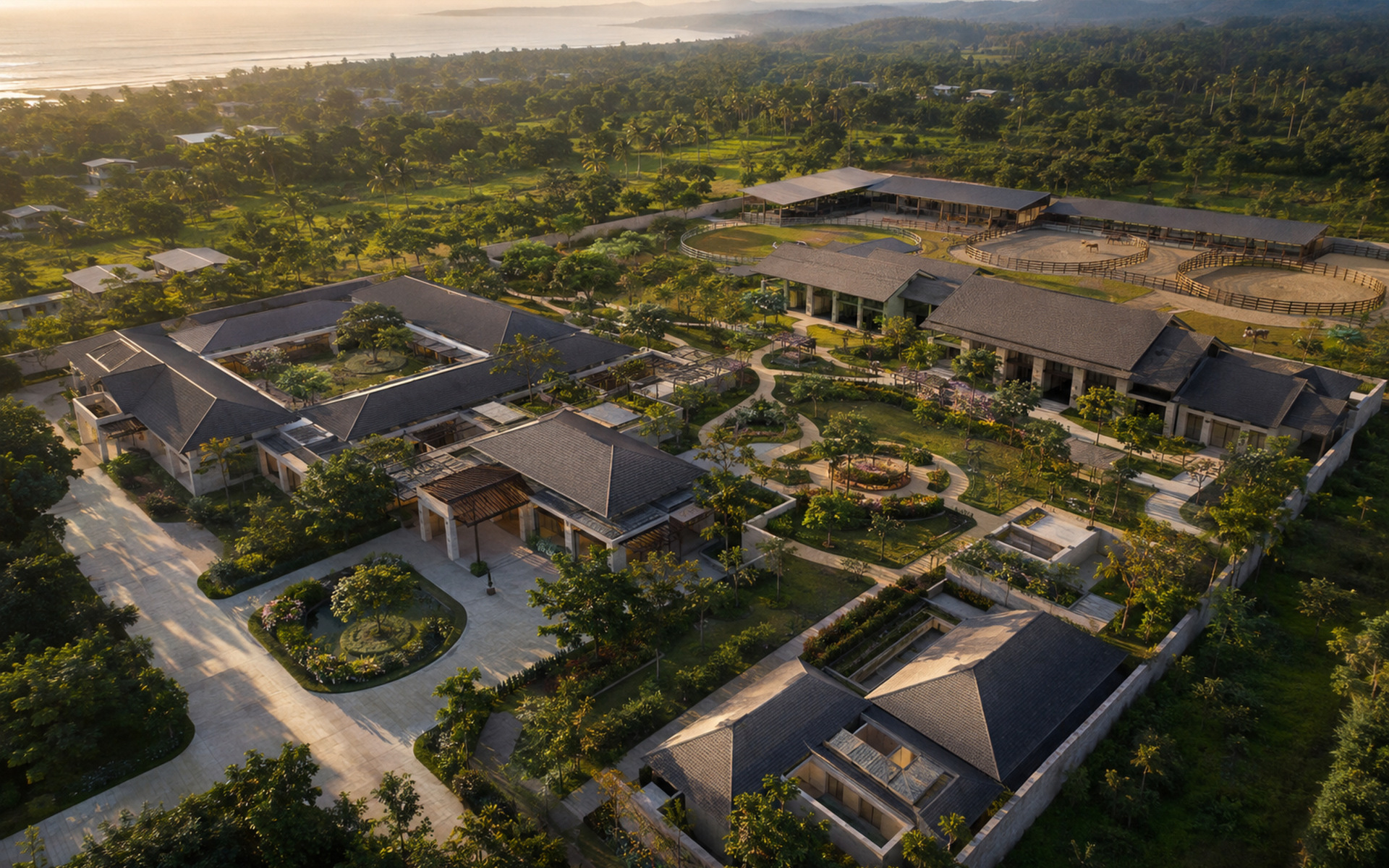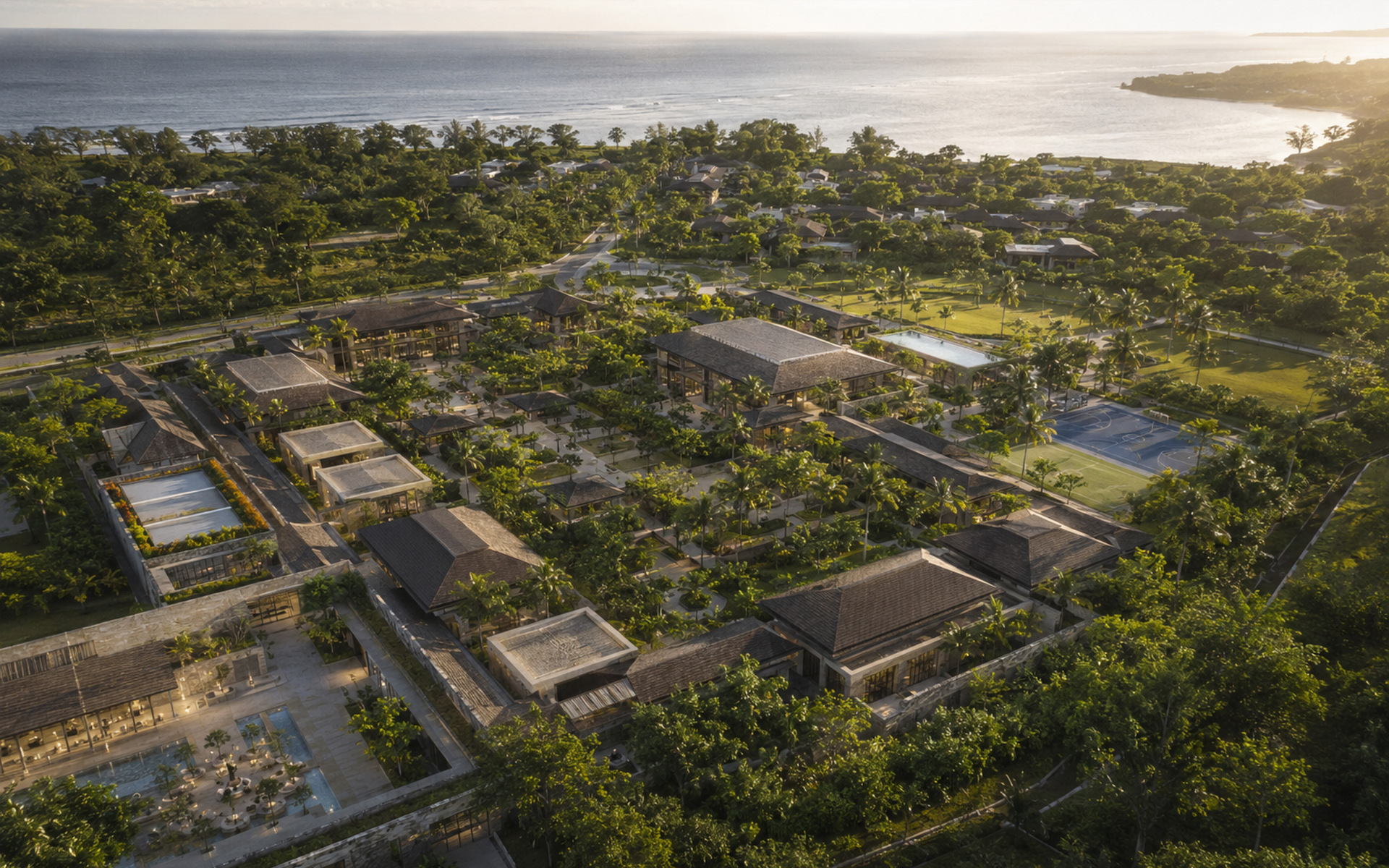
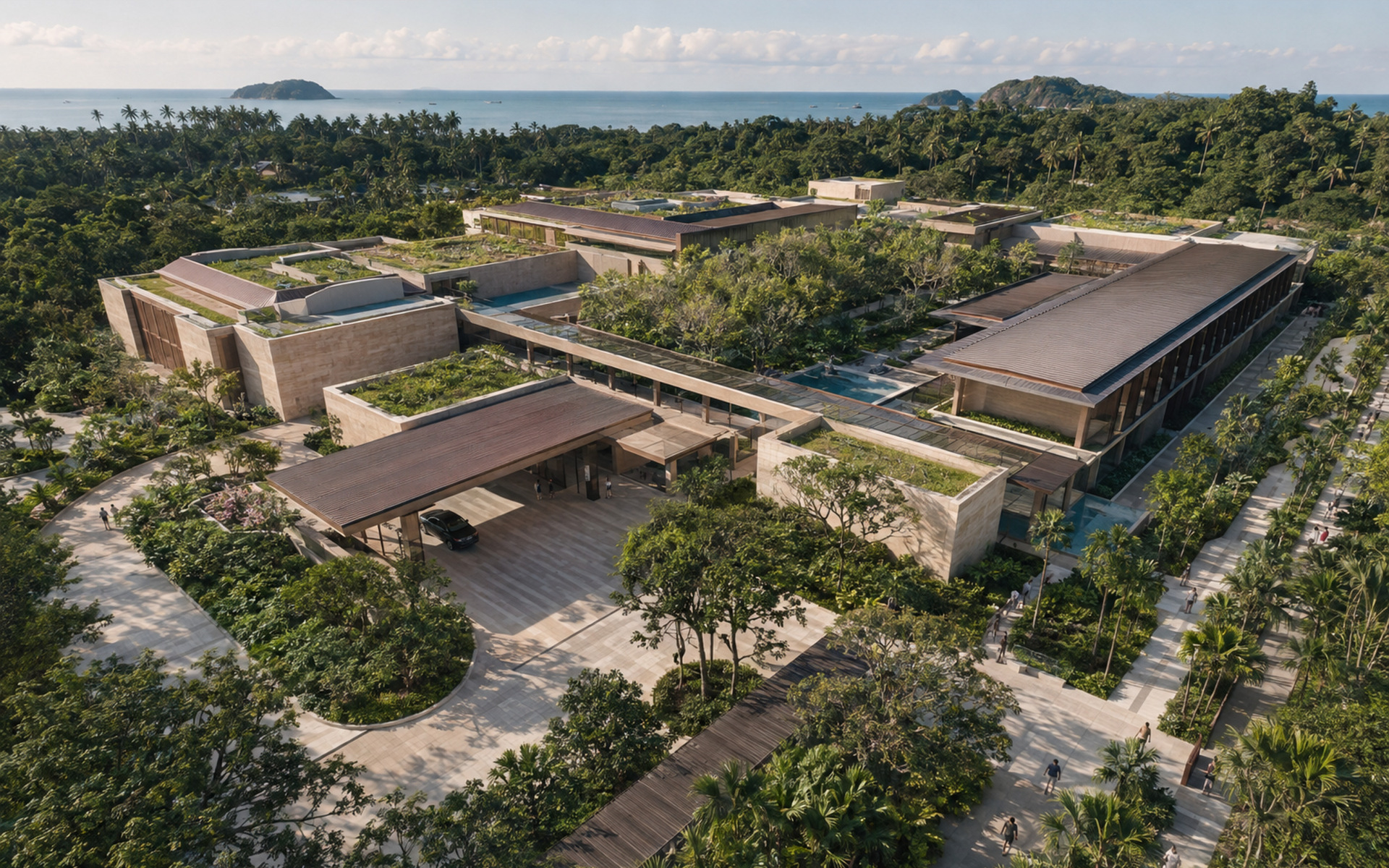
The complex in numbers
A facility planned in the founding concept dated 13 May 2026. Capacities, areas and costs are source estimates at full development, not an announcement of current operations, equipment or approvals.
| Indicator | Planning estimate |
|---|---|
| Project land | 500,000 m² |
| Built floor area | 72,000 m² |
| Beds | 128 |
| Outpatient visits | About 450 per day |
| Workforce | 1,100 full-time equivalents |
| Capital budget | USD 290 million |
| Equipment, platforms and robotics | 30 items costing USD 112 million, included in the complex budget |
Capacity and clinical facilities
| Service | Planned capacity |
|---|---|
| Inpatient rehabilitation | 96 beds |
| Complex and postoperative cases | 24 beds |
| High-dependency care | 8 beds |
| Assessment, fitting and follow-up clinics | 48 clinics |
| Operating rooms | 4 |
| Procedure rooms | 2 |
| Emergency and stabilisation | 6 stations |
| Advanced prosthesis production | 2,000 prostheses annually at maturity |
| Orthotic or assistive devices | 4,000 devices annually at maturity |
The patient journey
- Multidisciplinary assessment, followed by imaging and movement analysis.
- Device prescription, digital scanning, manufacturing and independent testing.
- Fitting, alignment and training in use of the prosthesis.
- Follow-up at 2 and 6 weeks, and 3, 6 and 12 months.
Specialties and services
- Rehabilitation and pain medicine, orthopaedic surgery and limb salvage, peripheral nerve and reconstructive surgery.
- Physiotherapy, occupational and hand therapy, adaptive sports and aquatic therapy.
- Psychological, social and vocational rehabilitation.
- Skin, wound and socket-pressure clinic; imaging, laboratory, pharmacy, blood bank and central sterilisation.
- TMR/RPNI for eligible cases and a limited osseointegration programme after licensing and strict selection committee review.
Laboratories and manufacturing
| Unit | Scope |
|---|---|
| Movement | 4 three-dimensional movement labs with force and pressure platforms |
| Muscle control | 2 EMG and neuromuscular control labs |
| Materials | Biocompatibility, composites, carbon fibre, resins and batteries |
| Mechanics | Mechanical stress and fatigue; serial traceability for every device |
| Design | Digital scanning, CAD/CAM, polymer and metal printing, and CNC |
| Mechatronics | Sensors, motors, control and software security |
| Research | Clinical outcomes registry, health economics, human factors and usability |
Initial devices and robotics
| Category | Planned number |
|---|---|
| Robotic gait training | 12 |
| Overground exoskeletons | 20 |
| Upper-limb and hand robots | 16 |
| Ceiling-mounted body-weight support | 8 |
| Smart pressure floors and walkways | 12 |
| Service, transport, cleaning or presence robots | About 35 in the founding summary |
| Collaborative manufacturing cells | According to protected production lines |
Technology under specialist oversight
- Gait and pressure-area analysis, component selection support and digital design, approved by the physician and prosthetist.
- Manufacturing quality monitoring, maintenance and component-failure prediction; optional post-discharge usage tracking with patient consent.
- The system does not prescribe or independently change prosthesis torque or critical settings.
- Manual stop button, force and speed limits, virtual fencing and an incident log for each robot.
- Device quality management under ISO 13485, risk management under ISO 14971 and relevant mechanical testing.
Planned workforce
| Category | Full-time equivalents |
|---|---|
| Physicians, surgeons, anaesthesia and emergency care | 80 |
| Nursing | 285 |
| Therapy and psychological and social rehabilitation | 260 |
| Prosthetics staff, technicians and engineers | 155 |
| Laboratory, imaging and pharmacy | 70 |
| Research, AI and quality | 80 |
| Administration, operations, facilities and hospitality | 170 |
| Total | 1100 |
Estimated functional budget
All figures are in USD million. Equipment is included in the total.
| Item | USD million |
|---|---|
| Buildings, systems and smart finishes | 110 |
| Medical and laboratory equipment | 58 |
| Specialist manufacturing, equine facilities or platforms | 30 |
| Robotics, AI and systems | 24 |
| Site works and internal services | 18 |
| Furniture and non-medical equipment | 10 |
| Design, permits, training and trials | 14 |
| Risk and escalation contingency | 26 |
| Total | 290 |
Details to reconcile before final design
The founding report lists 8 high-dependency beds and 24 beds for complex and postoperative cases. Equipment annex item C1-M07 uses 8 ICU, 24 HDU and 96 general beds. A final clinical allocation cannot therefore be inferred from the equipment package labels.
The founding report summarises service, transport, cleaning or presence robots as about 35. The annex specifies 35 transport and service robots in C1-R06 and 12 telepresence robots in C1-R07. These differing levels of detail require review when scope is approved.
Comprehensive founding report · Source pages: 10، 11 ↗